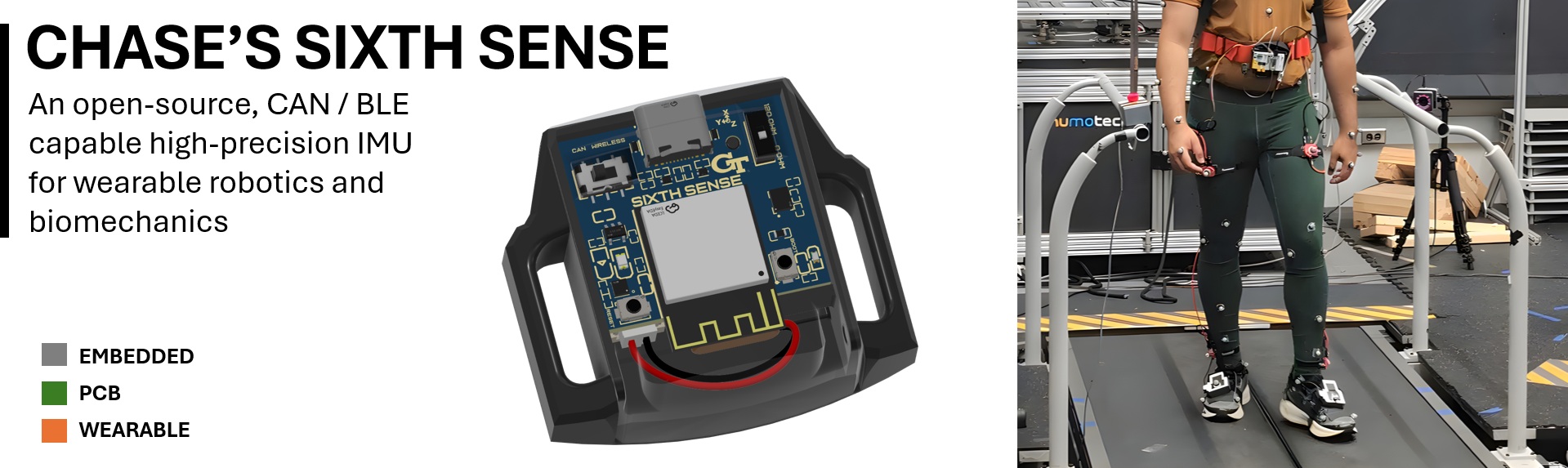
It has always been a challenge to accurately measure the kinematics of human motion with wearable sensors for the purposes of exoskeleton control and machine learning. As a graduate student in the EPIC lab at Georgia Tech, I created a custom 9-axis Inertial measurement unit to perform real time measurements of human motion to replace extremely expensive, aerospace grade IMUs with little to no sacrifice in performance. I also added BLE communications for wireless operation and CAN capabilities to allow for shared communications lines with robotic actuators. The open-source project is currently in development with more detais to be found at: https://github.com/ChaseSunGit/Chases-sixth-sense.
PCB Schematic
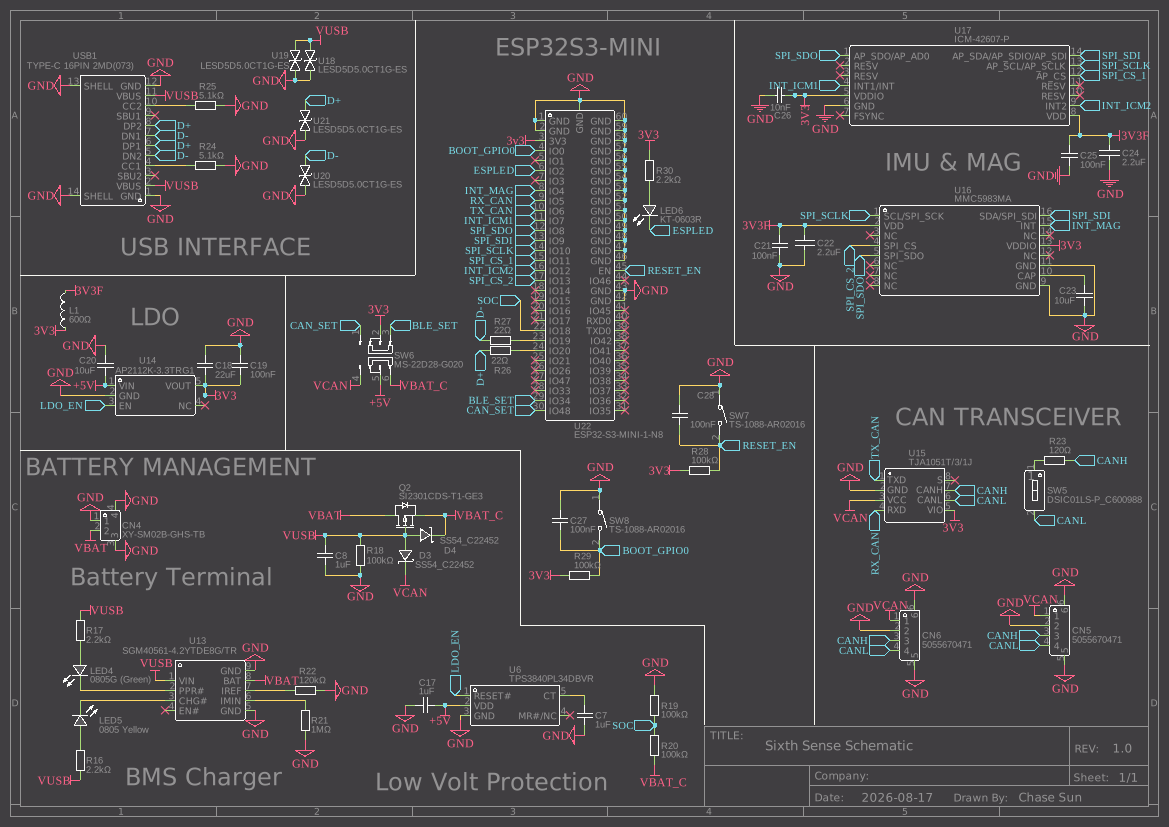 The Sixth Sense IMU is built on an ESP32S3 Wroom Mini microcontroller on a custom PCB. The two core sensors are:
- ICM 42607 Accelerometer + Gyroscope provides the foundational measurements for Kalman filter sensor fusion using the absolute gravity vector.
- MMC 5983MA Magnetometer provides the additional North vector for the Kalman filter to accurately calculate Euler yaw. In addition to these sensors, the PCB also contains:
- TJA 1051T/3/1J CAN Transceiver allows the sensors to be used in-line with robotic actuators while sharing communications
- Custom Lipo BMS enables wireless mode by managing the safe charging and discharging of a 1S, 3.7V Lithium polymer battery.
- Power management interface allows users to switch between BLE wireless and CAN wired modes while always retaining charging, programming, and logging through the UART over USB communication
Deployment and Comparison
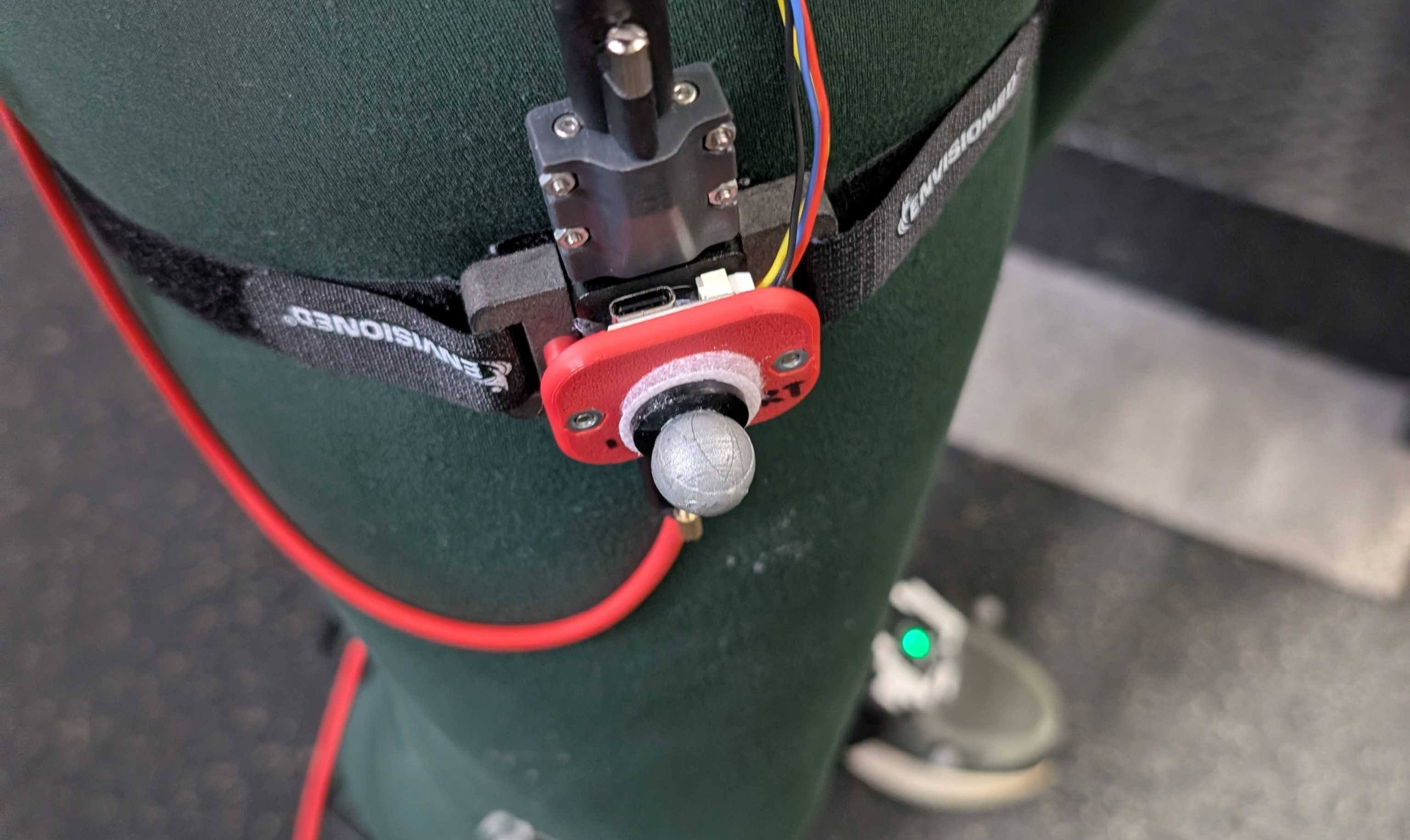 Here, a previous version of the Sixth Sense is mounted along with the Microstrain 3DM-GX5 (Ultra high end IMU costing $2000+) on a test subject along with motion capture dots to track ground truth joint kinematics. The test results are then fed into the EPIC Lab’s machine learning algorithms that predict joint moments from kinematic input.
Results
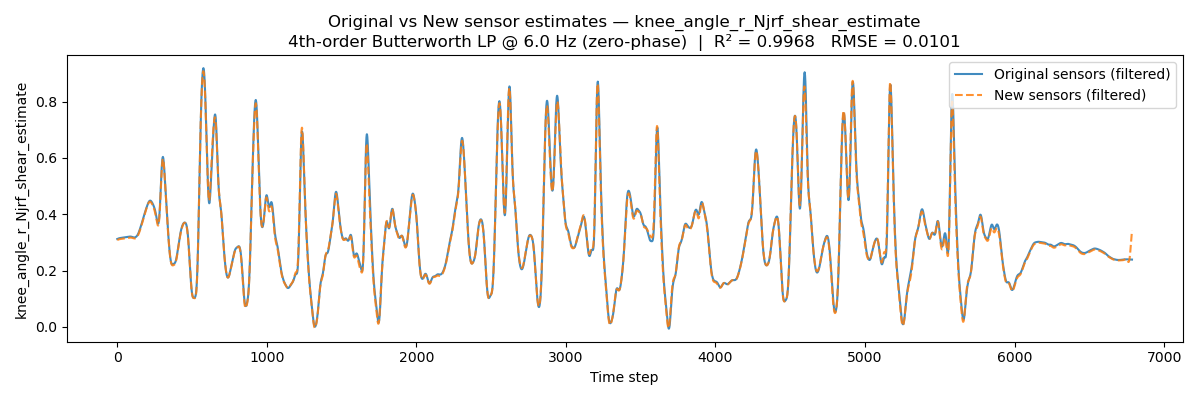 The comparison results in a R-squared of 0.99+, showing near identical output between the two sensors. This allows the lab to replace $2000+ IMUs with custom PCBs with a unit cost of $16 with no sacrifice in performance.