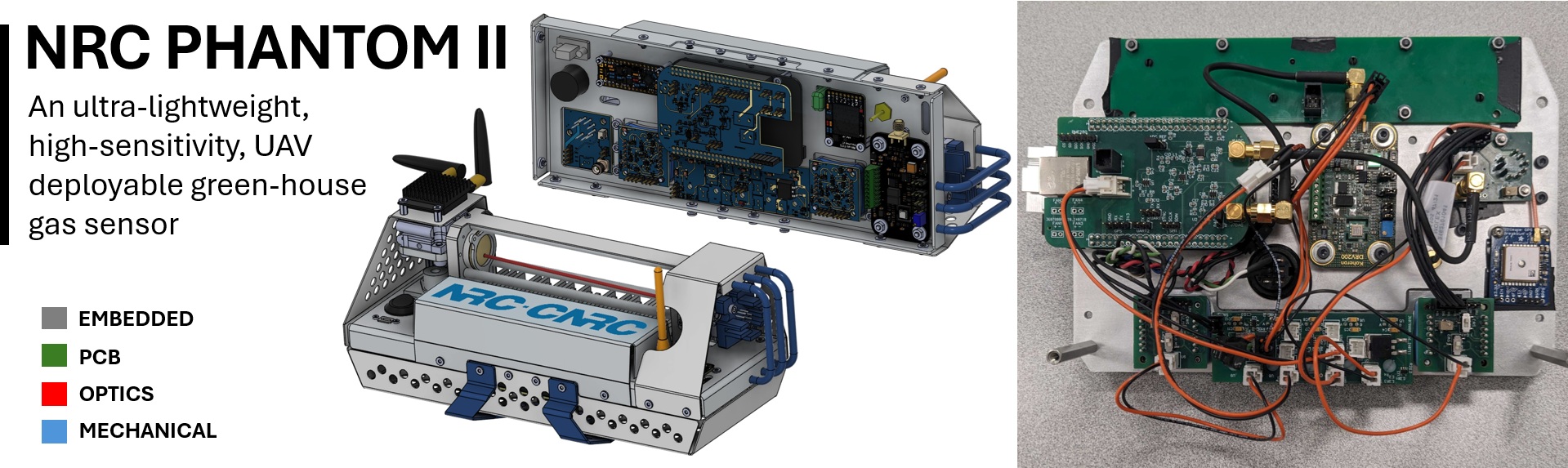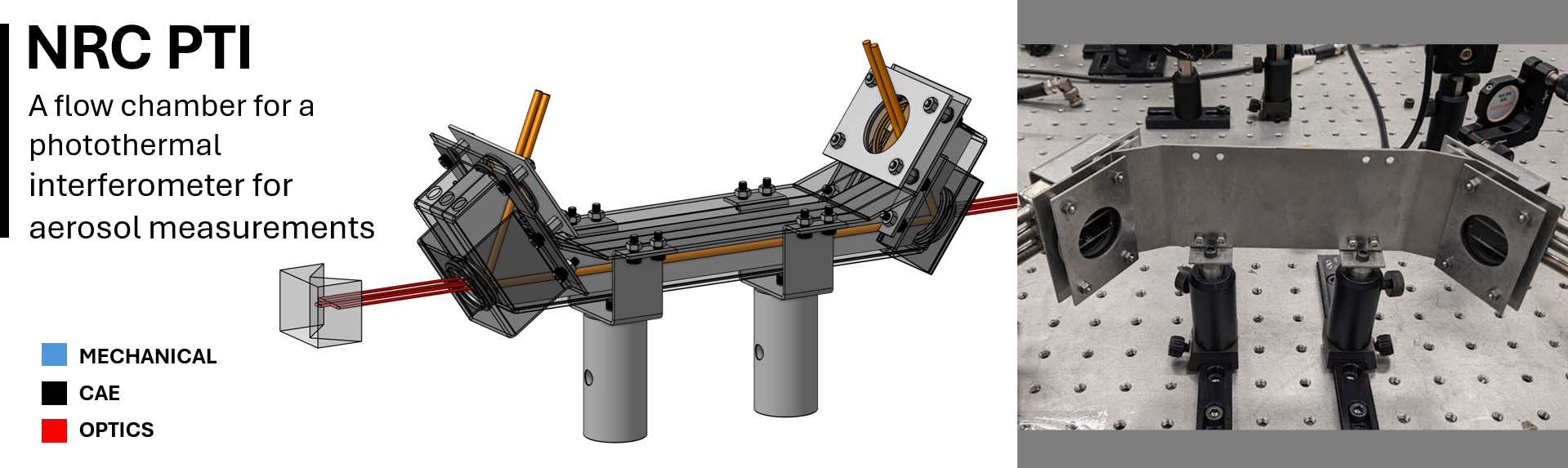
The NRC is developing an instrument that measures black carbon aerosol particles from aircraft engine exhaust. I have designed a sample cell that allows laser excitation and characterization of aerosol flows through a compact, multichannel cell. This design minimizes the turbulence of the flow and maximizes the path length of the measurement laser.
Design Challenge
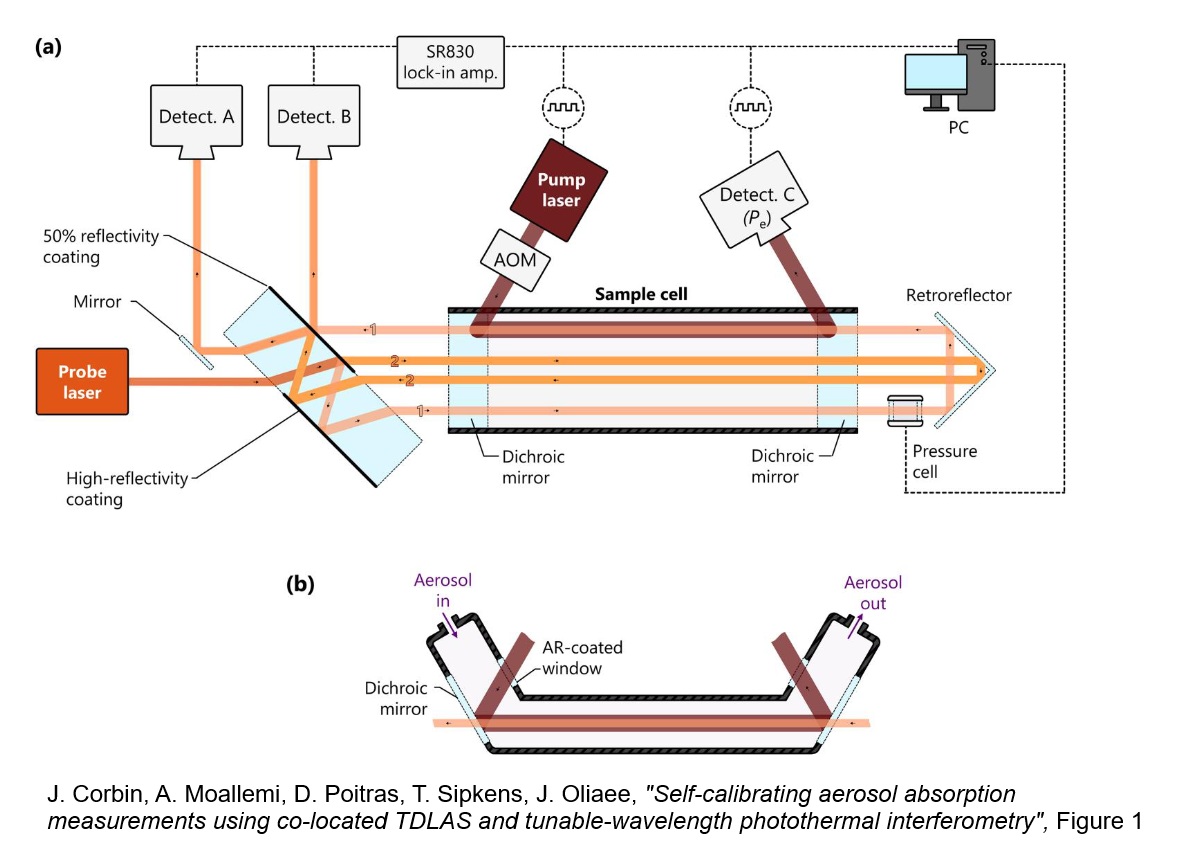 The Photothermal Interferometer (PTI) is used to measure the presence and morphology of black carbon particles as they are significant contributors to climate change world wide. The PTI works by overlaying two laser in the path of flow of carbon particulates, with one laser exciting the particles and the other measuring post-excitation emissions. The challenge for the flow channel I designed is therefore exactly overlapping all 3 elements to enable these measurements.
Design Diagram
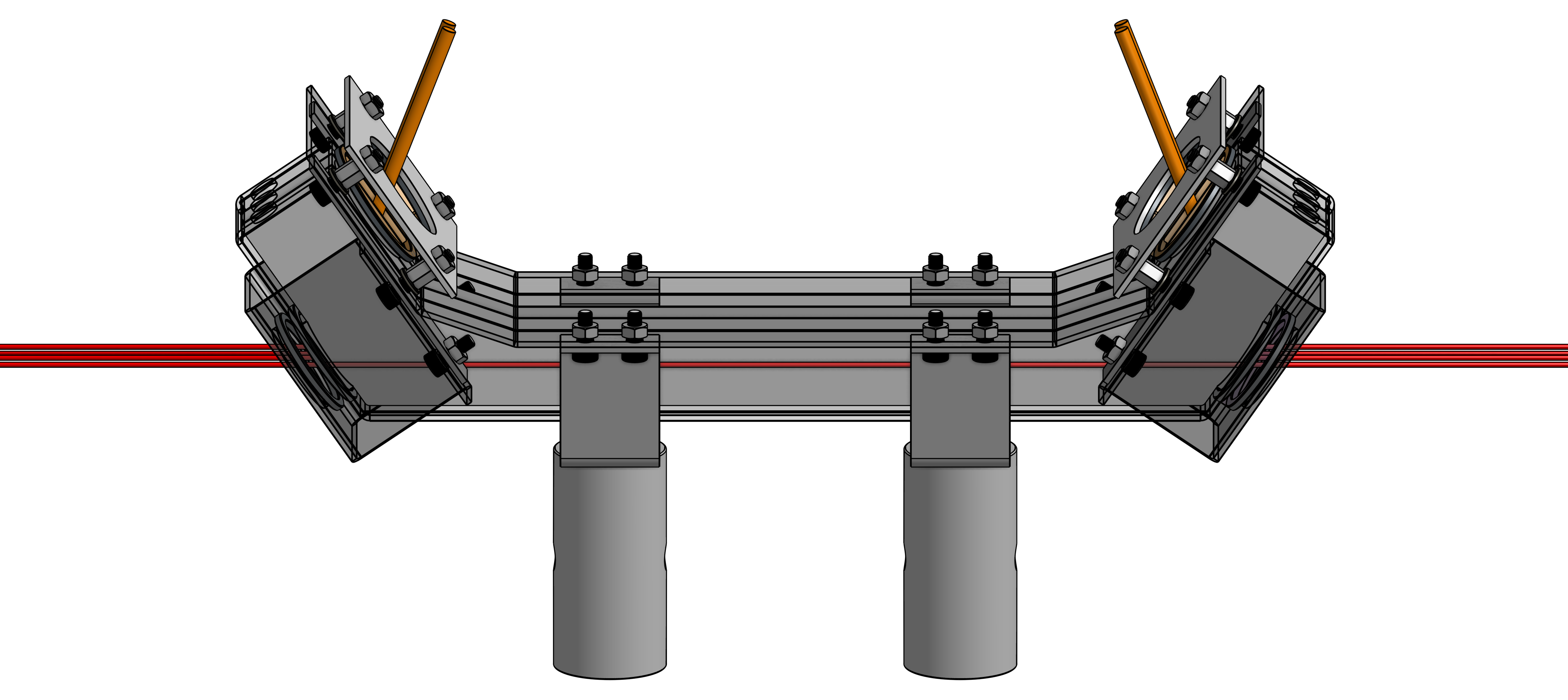 To overlap all elements, I designed a U-shaped channel for air flow carrying carbon particles with a window at the bottom sealed by a dichroic mirror. This dichroic allows the 632nm probe laser (red) to pass through while reflecting the 760nm heating laser (orange) directly into the same path and exits on the other side. The heating laser is injected at Brewster’s angle to minimize reflection and maximize power.
Computational Fluid Dynamics
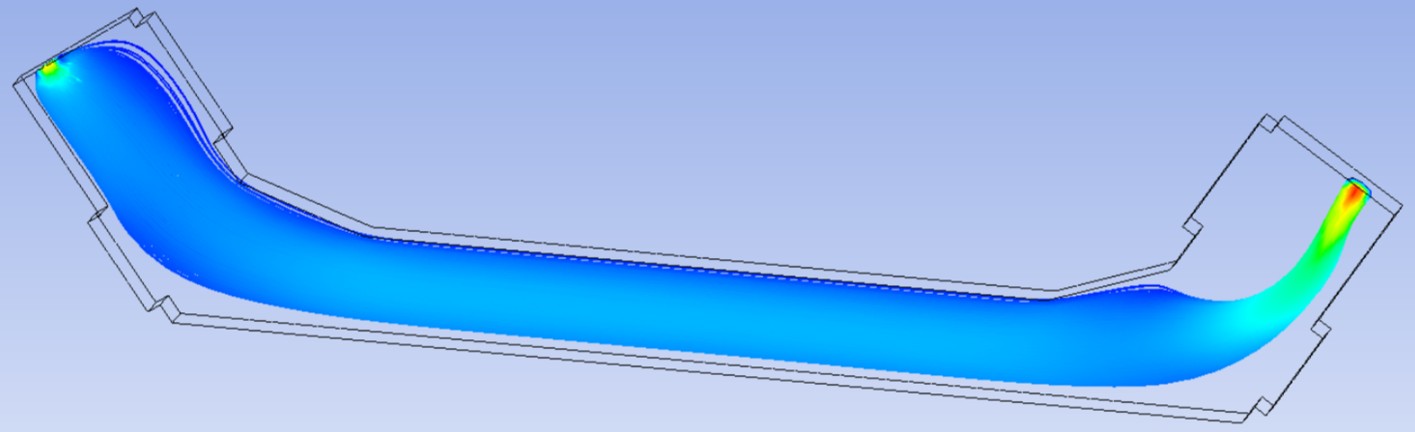 To validate the design in simulation, I performed computational fluid dynamics simulations with ANSYS Fluent to see the path of travel of particles seeded into the stream. Since the design required that the particles stay on the same path of the laser, I ensured that the flow across the channel was maximally laminar through modifying the cross-section geometry of the channel.
Associated Publication
J. Corbin, A. Moallemi, D. Poitras, T. Sipkens, J. Oliaee (07 Mar 2025): “Self-calibrating aerosol absorption measurements using co-located TDLAS and tunable-wavelength photothermal interferometry”, Aerosol Science and Technology